
Not just a Telescope
This telescope represents the compassion I have for space and my dream of looking up at the sky and knowing every fact behind every cosmic entity.
Our Vision
Our vision is to make a telescope that informs you about what you're looking at while your actively stargazing by using ai to analyze the sky and verbally inform you about what your looking at. For example.
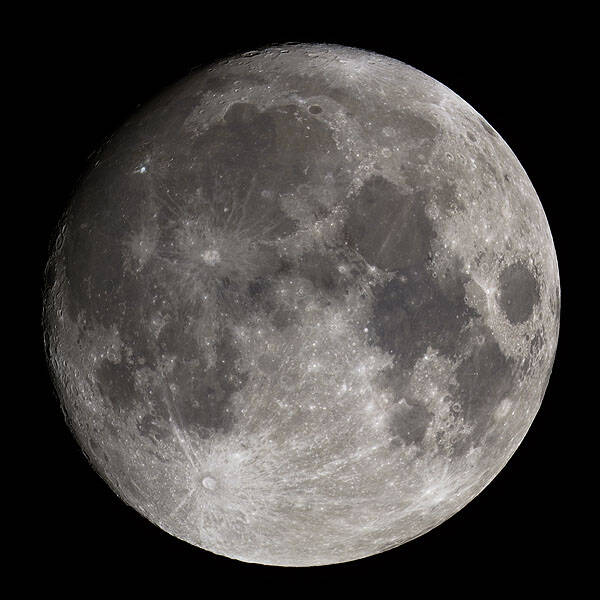
Here are some interesting facts about the Moon:
- The Moon has a mean diameter of about 3,475 km (≈2,159 miles) and is the only natural satellite of Earth.
- It orbits Earth at an average distance of approximately 384,400 km (≈238,900 miles) and completes an orbit every 29.5 days.
- The Moon has a solid, rocky surface that is cratered and pitted from impacts by asteroids and meteorites, and it has a very thin atmosphere called an exosphere.
- Humans first saw the far side of the Moon when a Soviet spacecraft flew past in 1959.
- The Apollo 17 astronauts described the Moon's fine dust as having a smell similar to burnt gunpowder.
These facts provide a glimpse into the Moon's characteristics and its significance in space exploration.

How it would ideally work
When you point the telescope at the sky, a Raspberry Pi instantly identifies what it sees and speaks facts out loud like an onboard AI.
1) Capture
A camera takes a quick image of the star field.
2) Recognition
The Raspberry Pi detects stars, matches their pattern to a built-in sky catalog, and determines the exact pointing.
3) Identification
Using the confirmed sky position, the system identifies the object centered in view.
4) Fact Retrieval
Verified facts such as object type, distance, brightness, and constellation are loaded.
5) AI Voice Output
A text-to-speech engine announces the information in a calm, AI-style voice.
6) Live Updates
As the telescope moves, identification updates automatically and new announcements play.
Create Your Own Website With Webador